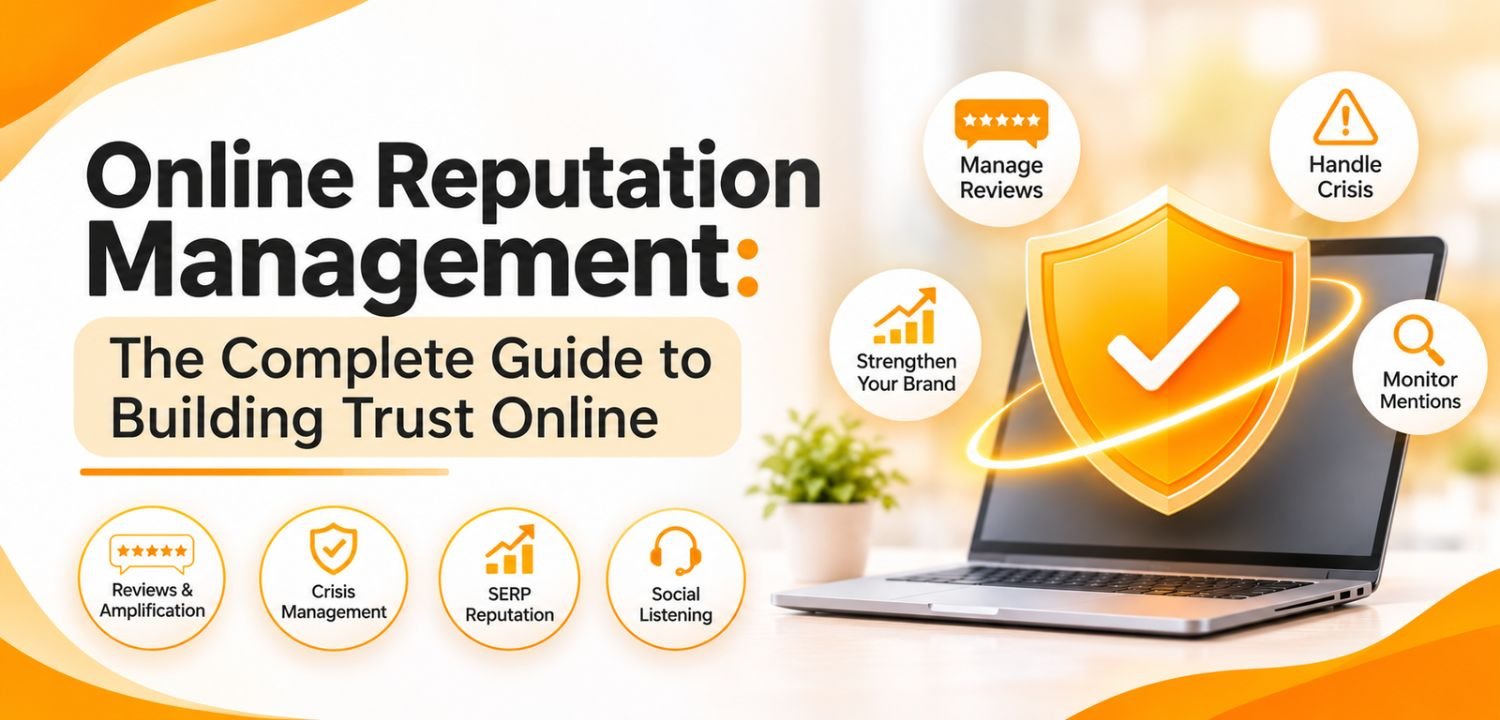
In 2026, Online reputation management is no longer just about responding to poor reviews or addressing negative search results. It has become a broader strategy for building trust, credibility, and a strong digital presence. Even if you are a large corporation, business founder, or professional, people are continuously forming perceptions about you. One such negative review, LinkedIn post, or Google search can influence their opinions.
Nowadays, customer complaints influence Google search results, AI-generated summaries, industry review platforms, and social media conversations simultaneously. They rely on research before making any informed decision. They compare ratings, check reviews, and observe the brand’s customer interactions before making a purchase. It has been evaluated that a single negative review can damage a business by driving away up to 22% of potential customers. This is the reason why brand reputation management is essential. It helps in improving credibility and customer relationships.
Reality: A single conversation on social media can even show up in the search summaries created by AI. That’s why companies should think beyond just classic SEO. They should consider the overall online reputation.
Brands that are succeeding today don’t wait for a reputation disaster to strike. They are continuously working on gaining trust on every digital touchpoint with ORM strategies. In this guide, we will walk you through our 4-pillar ORM framework that has helped us to manage the online reputation of 31,000+ clients across eCommerce and B2B Saas. You will learn how to generate authentic reviews, manage reputation crises strategically, dominate your search results, and monitor brand mentions before they become problems.
The ORM Framework: 4 Pillars That Build Resilient Reputations
Online Reputation Management framework protects your digital reputation by combining strategy, monitoring, and proactive content creation. We have distributed this approach into four interconnected pillars. They work together to build trust and authority.
Review Generation & Amplification
Review generation and amplification are dynamic online reputation management strategies. These are primarily focused on gathering genuine customer feedback by distributing it across different online channels.
According to BrightLocal, the online review ecosystem has considerably increased in 2026 due to AI-driven consumer behaviors. But, more importantly, 97% of consumers rely on reviews before making a purchase, and 41% of them “always” read reviews while searching for a business. It’s a huge 12% year-over-year increase from 2025’s baseline of 29%.
Problem: Today, most SMBs are struggling with decreased local search visibility, a lack of customer trust, and customer acquisition. Customers heavily rely on ratings. Most of them do not leave reviews unless they are asked to do so. This lowers buyer trust and causes lost revenue.
Solution: Our systematic approach of Google review mastery can generate, manage, and leverage customer reviews on your profile. It can increase your review volume by 40-300% in 2-3 months. We do not motivate fake reviews. Instead, we work on strategically asking satisfied customers at the right time and through the right medium in the right way.
As a verified GoodFirms partner and a top-rated reputation management agency on Clutch, we know how to drive results. We have also built a detailed guide to review generation across Google and other industry-specific platforms. Check out our Multi-platform review strategy to master every platform. It’s a cross-platform response strategy with unified management tools, such as Birdeye, Trustpilot, etc.
Crisis Management & Negative Reviews
Negative reviews can cause a reputation management crisis if left unattended. Even the best company can get a false review, or sometimes a salesperson might encounter a customer with unrealistic expectations. Crisis management can help to mitigate the situation by suppressing the poor customer feedback on online platforms. It’s an approach to control factors or occurrences that hamper the online presence.
Problem: Negative feedback is not the end of your story; it’s the beginning of the next big opportunity. While everyone’s first feeling may be to hide or dismiss the negative review, it does not define you or your business. It’s totally based on how you are responding to negative reviews .
According to BrightLocal, 89% of consumers evaluate business responses to reviews. Customers are watching your reply strategy closely. They usually await a response to negative feedback within a week, or many expect action within just 48 hours. One negative review handled well is worth more than five positive reviews.
Solution: With our specialized strategy, you will learn when to take offline vs public response and get real anonymized examples of successful reputation recovery.
Our guide on managing brand crises includes prevention and detection techniques, and social media monitoring.
SERP Reputation Management
Reputation management involves influencing how an individual or business is perceived online. With the evolution of social media and the internet, online search results have become an important part of online reputation.
Problem: Your online reputation is the very first impression you make on customers and employees. Negative reviews and outdated information on the first page act as a silent deal killer. For both individuals and enterprises, this gap can create severe financial and operational consequences.
It is mentioned that 88-92% of clients and employers carry out an online search before engaging with you or your business. There are many such resources, like social media accounts like Instagram, YouTube, TikTok (for US audiences), and review platforms that influence your online reputation. So, it’s essential to keep them monitored and improved.
Solution: Focus on creating positive and authoritative content to suppress the negative content. There’s no need to remove the negative content through different tactics because you can influence what ranks on page one. Our dominating Google’s first page strategy will help you to build massive brand authority, ensuring your positive content naturally ranks at the top.
Nowadays, Google AI overviews summarize the reviews directly in search results. Our online authority building strategy lets you create positive content, earn authority mentions, and position your brand across Google’s first page.
Social Listening & Proactive Monitoring
Proactive monitoring catches brand conversations. This approach is specially designed to detect them before they escalate into major trends or public relations crises.
Problem: Some unhappy customers may never contact support. Instead, they may share their experience privately on social media or other online channels . They post on personal feeds without ever filling a support ticket or tagging the brand. Reach out to unhappy customers and try to resolve the issues.
Solution: Social listening uncovers untagged and indirect complaints. This will help your team to contact unhappy or silent users and resolve issues before they cancel their subscriptions or switch to a competitor.
There’s no need to buy heavy and expensive tools. You can use Mention.com and Brand24. These are affordable and scan the entire internet for brand mentions in real-time.
Early detection can change everything. Our guide on social listening strategy covers what to monitor, which platforms matter, and tool comparisons. It is the fastest way to handle a reputation crisis or to prevent it from becoming a crisis.
Strategic Review: Generation, Management & Amplification
A highly-converting review must be automated, frictionless, and scalable. Local search visibility and consumer trust are directly impacted by the reviews. This can compound your brand equity over time.
The Evolving Landscape of Trust
Online reviews have replaced traditional word-of-mouth. Today, a staggering 97% of consumers read online feedback before ever visiting a local business. While half of the general population (49%) trusts these digital reviews as much as a personal recommendation from a friend, that standard skyrockets to 91% among 18- to 34-year-olds. For businesses targeting modern buyers, your public rating is no longer just a metric; it is the primary driver of customer trust.
The conversion impact: An increased rating from the low-3-star range to above 4-star can boost conversion rates by nearly 40%. This makes customer reviews a significant driver of sales and revenue growth. Businesses with lower ratings may miss out on significant sales opportunities because improvements in customer ratings can turn into substantial revenue gains.
Impact of an AI overview: Customer reviews play an important role in how your personal identity or a business is represented. Google’s AI Overviews generate search summaries by integrating information from multiple sources. Strong review signals can influence how a brand is represented in these AI-generated summaries. Businesses that earn positive reviews and maintain a strong online reputation are more likely to build trust with both users and AI-powered search systems.
Customer reviews are not just a reputation-management tool. They control customer trust, purchase decisions, and how AI-powered search experiences interpret and present your business online.
The Platform Priority Matrix
All the review platforms cannot deliver the same business impact. Implementing the strategies through the right channel helps in enhancing visibility, trust, and lead generation.
Google Reviews: For most of us, Google Reviews are the top priority. They have the biggest impact on local search rankings, online visibility, and customer trust. A good rule of thumb is to spend about 70% of your review efforts on Google.
Trustpilot: It is the next most important channel for a B2B, SaaS, or service-based business or an owner. It is widely trusted by customers and often appears in search results. It’s worth dedicating 15% of review efforts here.
GoodFirms: This platform can help agencies, consultants, and professional service firms to reach potential customers who are actively comparing providers. Focus on making 10% review efforts to build presence on this platform.
Firstly, start with Google Reviews to get the highest SEO impact and broadcast audience. Then stretch towards other platforms like Trustpilot and GoodFirms. This approach is the best mix of visibility, credibility, and customer trust.
Our 5-step Review Generation Strategy
This strategy is useful across multiple industries. We have implemented this strategy to our 31,000+ clients and driven real results.
- Identify the right time: Do not ask for reviews randomly. Identify the right moment when customers are most satisfied and most likely to respond. The moments to consider:
- Post-successful delivery: Ask just after providing the needed service
- Post-purchase satisfaction: Ask 2-3 days after the customer receives their product
- Post-support resolution: Seek a review right after providing the resolution \
Avoid asking when the client is facing technical problems, payment or billing issues, and is busy or in a rush.
- Try asking through multiple channels: Everybody prefers a different mode of communication. Do not rely on just one method; different customers respond to different channels.
- Email: This is best for B2B services. Send an email after 2-3 days of successful task completion. Use a direct review link, personalize the message, and thank the customer
- SMS: SMS can be sent within 24 hours. This is the best approach for e-Commerce. Keep the conversation short and mention a direct review link.
- QR code: In case of offline or physical touchpoints, QR code is the easiest method to get customer reviews. Add it to receipts, packaging, invoices, or store displays.
- Direct communication: This is the most trusted way to ask for a review. Train staff to politely ask for feedback after the service and share the link immediately.
- Keep it simple: This is the critical approach. The easier it is, the higher your response rate will be.
- Instead of directing customers toward the home page, send them directly to the review page.
- Make sure to use a mobile-first approach and ensure everything works fine on mobile.
- Ask for feedback within 24-48 hours after a positive experience.
- You can offer a small perk or say thank you. Do not offer rewards for positive reviews.
Use HubSpot, Klaviyo, or similar platforms to automate these tasks. Send the trigger-based link to customers. This ensures consistency and scales without extra work.
- Respond to every review: engage with your customers by responding to reviews within 24-48 hours. It helps in improving search visibility and customer retention.
In case of positive reviews:
- Thank the customer by name
- Highlight something specific they said
- Invite them to come back and refer other customers.
In case of negative reviews:
- Take the feedback seriously
- Show that you really want to fix the issue
- Follow up until it gets resolved
- Utilize genuine reviews everywhere: Focus on reusing reviews to get more customers. Don’t just collect them. This helps in building consumer trust and maintaining platform integrity.
How to use reviews:
- Website: Add top reviews to your homepage, service pages, or testimonials section
- Social media: Share screenshots of reviews on different social platforms. Tag the customer if possible.
- Ads and marketing: Use review quotes in Google Ads, Facebook ads, and even email signatures.
- Case studies: Turn strong reviews into short success stories.
To stay consistent, follow this simple review management system. You can break this strategy into a weekly routine like this:
- Monday: Check new reviews (about 10 minutes)
- Tuesday to Thursday: Reply to reviews (5 – 10 minutes daily)
- Friday: Share results or updates with your team
Platforms like review management tools, such as Birdeye or Trustpilot, can help you track everything in one place. Be consistent, not perfect. A simple system followed on a regular basis is better than a complex one.
Crisis Management: Responding to Negative Reviews & Brand Crises
Negative reviews can affect a business’s reputation, but the response to that feedback can be just as important. In reality, your response matters more than the review itself. Customers don’t read negative reviews to assume the worst. They read them to check:
- How serious the problems are
- Whether the business fixes issues
- Whether the company actually cares
Studies published in the Harvard Business Review suggest that when businesses respond to complaints in a professional and helpful way, it can increase trust from potential customers rather than reduce it. This concept is called the service recovery paradox.
Research also shows that a portion of unhappy customers may become repeat customers if their issue is handled well. This doesn’t mean the problem disappears; it means:
- The customer feels heard
- The business showed an effort to fix things
- Trust can be rebuilt
Negative reviews are not the real risk. Leave a thoughtful response to turn a bad experience into trust for future customers.
Our 4- Step Response Framework
This framework works best for 95% of reviews. This approach is useful to turn bad situations into trust-building moments.
Step 1: Empathize:
Respond within 24-48 hours. Show that you genuinely care and understand the issue. Avoid arguing or defending yourself.
Say:
- “I’m truly sorry you had this experience”
- “I understand your frustration”
Avoid:
- Defending yourself
- Making excuses
Step 2: Clarify:
Try to ask questions or collect details to understand the issue in a better way
Say:
- “Can you help me understand what happened?”
- “Can you share a bit more so we can fix this properly?”
This makes the customer feel that they are being heard and take problems seriously.
Step 3: Offer a solution (same response or within 48 hours)
Share the response within 48 hours. Clearly explain how you will fix the issue.
Mention:
- Send a replacement or refund in case of a product issue
- For service-related issues, fix the problem with a clear timeline
- Correct the charge for billing issues and explain what happened
Don’t just ask what the customer wants, tell them what you will do and then follow through.
Step 4: Follow up
Take a follow-up from the client within 48-72 hours after fixing the problem
Say:
- “Just confirming your replacement has shipped. Please let me know when it arrives.”
- “Wanted to check if the refund has come through successfully.”
For:
- Empathy: “I’m really sorry this happened.”
- Clarify: “I have checked your order and want to understand what went wrong.”
- Solution: Send a replacement and credit or refund
- Follow-up: Confirm delivery and check satisfaction
Most businesses stop after apologizing. The real difference comes from fixing the issue and following up. This is what turns unhappy customers into loyal ones.
SERP Authority: Controlling Your Google Reputation
When someone searches your business, the first page of Google is what shapes their opinion of you. You can build trust and turn casual stakeholders into committed customers through proactive search engine reputation management (SERM).
Most people never go beyond page one of Google:
- If positive results show up first, people trust you
- If negative results show up first, people lose trust
What appears on page one often becomes your first impression, even before someone visits your website.
AI Overviews
Google’s AI summaries now pull information from different websites to create a quick answer. This means:
- Google looks at your online reputation across multiple sources
- Strong and consistent information about your brand increases trust
- Your online authority affects whether you appear in these summaries
The 3-Part SERP Authority Strategy
This 3-part SERP authority-building strategy is useful to build trust and online reputation among customers.
1. Create your own positive content
Your goal is to fill Google’s first page with your own or controlled content.
This includes:
- About page, blog posts, and testimonials on your website
- Social media profiles, such as LinkedIn, YouTube, Instagram, etc.
- Business directories and review platforms
Building listings on trusted third-party platforms is crucial. This includes sites like GoodFirms, Clutch and ProvenExpert in some European markets. The primary goal is that when someone searches your brand, most results in the top 10 should be controlled by you.
2. Earn authority mentions from trusted websites
Google trusts third-party websites more than your own content. It also values what other trusted platforms are saying about you. Third-party mentions carry more weight because they come from independent sources.
You can build authority by:
- Getting featured in online articles or news sites
- Appearing on podcasts or interviews
- Listing your business in industry directories
The overall goal is to earn 5 strong third-party mentions on reputable websites within 12 months. Use journalist-request and expert-contribution platforms to identify legitimate opportunities for media mentions. These platforms can help you build long-term relationships with reporters and lead to more consistent coverage. Pursue legitimate editorial, expert-contributor, podcast, interview, and industry-publication opportunities to build third-party authority.
3. Handle negative content
Sometimes negative or incorrect content appears in search results. Removing negative content should be a last resort. It is only used in serious or clearly justified cases.
Possible actions:
- Remove copied content using copyright claims
- Request removal of private or harmful personal information
- Report fake or policy-violating reviews
- Take legal action only if necessary (defamation cases)
Trying to remove everything is not realistic. It’s usually better to create more positive content so negative results move lower in rankings. You can influence Google, but you can’t control it.
Social Listening and Proactive Monitoring
The fastest way to handle a reputation crisis is to catch it early. If you catch the issue within a few hours, you can fix the issue and often prevent it from spreading. Early detection with proactive monitoring can completely change the outcome. In this, you should not only track your brand name. You need to monitor different types of mentions:
- Brand name mentions
- Industry keywords
- Competitor mentions
- Product keywords
- Team mentions
You can start monitoring with the help of recommended tools and upgrade them later according to your budget and needs.
- Free tools: Google Alerts and built-in social media analysis
- Affordable tools: Mention and Brand24
- Advanced tools: Sprout Social and Hootsuite
How to Respond to Mentions:
- Positive mentions: Respond quickly and positively. This helps strengthen relationships and builds trust.
- Neutral mentions: Respond in a helpful manner and informative way. Focus on providing useful answers or resources.
- Negative mentions: Respond calmly within 24 hours. Understand the issue clearly before reacting.
How to Implement 30-60-90 Day Reputation Management Implementation Roadmap
Most of the individuals and businesses make the same mistake by tackling every aspect of reputation management at once. Do not try to implement the 4 pillars at once. Instead, try this:
First 30 days: Foundation
- Check your current online reputation
- Set up a review collection system
- Optimize Google Business Profile
- Set up Google Alerts for brand name + top 5 keywords
- Prepare response templates
Days 31-60: Amplification
- Collect new reviews consistently
- Respond to all reviews
- Create a few positive content pieces
- Set up monitoring tools, such as Mention.com or Brand24
- Train your team
Days 61-90: Authority building
- Increase review volume
- Submit at least two applications for industry awards
- Build a referral incentive program
- Track brand sentiment weekly
- Audit SERP for content gaps and brand searches
By day 90, you have a system in place and early momentum. From here, it’s about optimization and scaling.
Why You Can Trust this Framework?
This framework is based on proven reputation management best practices offered by AM Web Insights to businesses across industries. We have implemented this framework with 31,000+ clients across different niches. We are featured on widely trusted review platforms like GoodFirms and Clutch as reputation management specialists.
We only recommend ethical strategies, and our main focus is on proactive monitoring and transparent communication.
No fake reviews. No manipulation. No shortcuts.
Ready to Build Your Online Reputation Strategy?
Online reputation management is an ongoing business function. The brands that win online are the ones that consistently generate positive reviews, monitor conversations, and build authority across multiple channels.
This is your time to implement a structured online reputation strategy to improve customer trust and strengthen your brand’s visibility. Whether you are starting from scratch or looking to improve an existing reputation management process, following a proven roadmap by AM Web Insights can help you achieve measurable results faster and more consistently.
Frequently Asked Questions About ORM
What is an online reputation strategy?
An online reputation strategy is a structured plan for managing how your business is perceived by customers.
How long does it take to improve an online reputation?
Most businesses see improvements within two to three months. The time period can be up to 6 months if you want to gain significant authority and visibility
What is the most important review platform for businesses?
Google Reviews is the highest-priority platform because it directly influences customer trust and local search visibility.
Should I respond to every review?
Responding to both positive and negative reviews improves customer trust and shows potential customers that you value feedback.
How can I monitor my brand’s reputation online?
You can monitor your reputation using tools such as Google Alerts, Mention, and social listening platforms that track reviews, social media conversations, and brand mentions across the web.
How can I remove negative reviews from Google?
You cannot remove every negative Google review simply because it is unfavorable. However, you can report reviews that violate Google’s policies, such as fake, spam, or abusive content. For genuine negative feedback, respond professionally, address the customer’s concerns, and try to resolve the issue.
What is the difference between online reputation management and SEO?
SEO focuses on improving a website’s visibility in organic search results, while online reputation management focuses on how a business or individual is perceived across the internet. Both can work together through authoritative content, brand mentions, review management, and improved search visibility.

Ashu Rana
Ashu Rana is the Founder & CEO of AM Web Insights Private Limited, with 8+ years of experience in digital marketing. He specializes in SEO, Local SEO, Online Reputation Management (ORM), Google Business Profile optimization, and digital growth strategies. He has helped businesses and professionals across the USA, UK, Canada, UAE, and other global markets improve their online visibility, search rankings, and reputation.

Comments are closed