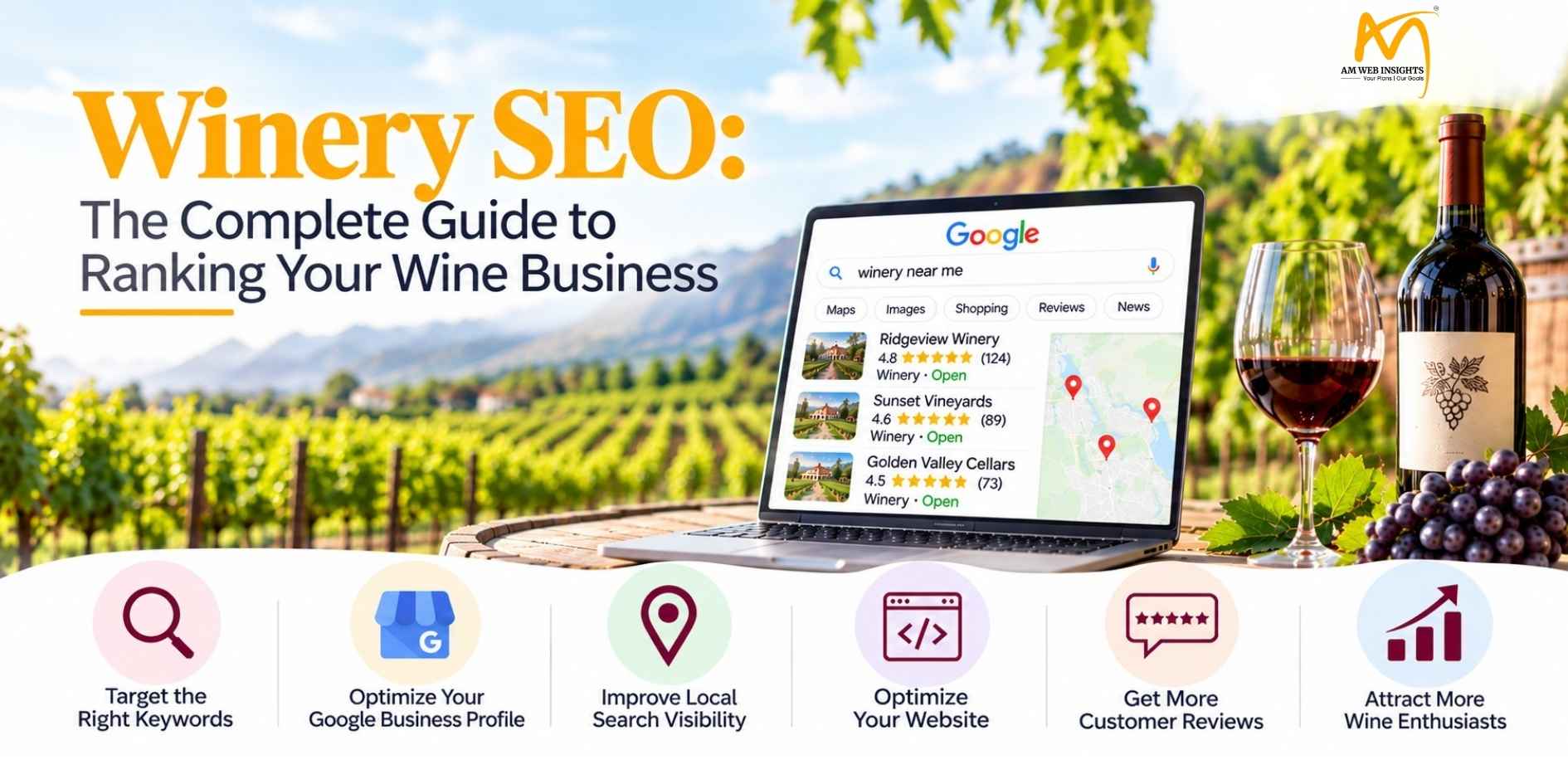
What makes a winery truly successful? It takes great vineyards, delectable wine, an excellent wine-making process, and a credible website. You have all these prerequisites, and your brand is still buried on page three of Google; it means the website is missing one critical piece: proper search optimization. Mastering SEO for wine businesses is the most effective way to attract steady visitors to your tasting room and build a loyal wine club membership. With smart search strategies, you can reach wine lovers, outshine local competitors, and turn high-intent traffic directly into real sales.
Understand How Wine Buyers Actually Search
Every strong SEO strategy starts with understanding search intent. Wine buyers search with different goals, and your site needs dedicated pages tailored to each mode:
- Local & Experiential: Searches like “wineries near me” or “Napa Valley tasting room.” Optimize your Google Business Profile and landing pages with reservation links to convert weekend travelers into visitors.
- Transactional & DTC: High-intent queries such as “buy Pinot Noir online” or “cabernet sauvignon gift set.” Target these with rationalized e-commerce product pages and clear checkout paths.
- Informational & Educational: Queries like “best food pairing for Riesling” or “how to cellar wine.” Use blog posts to educate readers, build brand authority, and nurture long-term loyalty.
- Branded Searches: Queries using your specific winery name like “Robert Mondavi winery tour booking” or “La Marca Prosecco reviews.” Optimize core brand pages so third-party directories don’t steal your top rankings.
Aligning your content with these distinct search intents ensures you attract the right audience at every stage of their buyer journey.
The Two Instruments of Winery SEO
Wine businesses are unusual: you’re simultaneously a local destination and a national shipper. That means two SEO engines running at once.
Local SEO for wineries
Local SEO for wineries is how you get people through the tasting room door. Not just visitors browsing your site. Actual bodies, actual bottles sold.
- Google Business Profile – It is your biggest lever here. Right categories, current hours, real photos, upcoming events, products listed, and someone actually answering the Q&A. Set it up once and forget it, and you’ll lose “wine tasting near me” searches to whoever’s actually maintaining theirs. [EXTERNAL LINK: Google’s Business Profile guidelines]
- Matched Citations on All Platforms – Your name, address, and phone need to look identical across every directory and tourism site. Even a single inconsistency quietly drags your rankings down.
- Reviews & Actual Replies – A great review with no response looks abandoned. Reply to both the good and the bad – Google notices, and so does the visitor deciding between you and the estate down the road.
- Real Pages for Real Places – Your tasting room, your tours, that harvest festival every October – each deserves its own separate page, not a generic “About Us” trying to cover everything.
DTC & Wine e-commerce SEO
SEO for wine ecommerce wins you online orders, not just page views. Vineyards selling direct need this as much as any online retailer.
- Product Pages First – Write your own tasting notes. Skip the copy-pasted manufacturer descriptions – everyone else already used those, and Google knows it. Add structured data, clear shipping info, and titles that actually describe the bottle.
- Collection Pages – Create pages by how people search. Varietal, region, price range, occasion, style – people search all of these. Each one deserves its own page instead of getting buried in a giant catalog.
- Chapter and Verse – Shipping accuracy matters more than people think. Say exactly where you can and can’t ship. Get it wrong, and you lose trust right before checkout, not after.
- Feed the Wine Club – It is the real win. One bottle sold is fine. A member signed up for life is better. Push your highest-traffic pages toward club sign-ups, not just single purchases.
The Keyword Strategy for Wine Businesses
You don’t need thousands of keywords. You need the right ones mapped to the right pages. A simple, effective approach:
- Claim Your Money Terms – Commercial searches like “[Florence] wine online” or “[varietal] delivery” belong on service or collection pages built to convert – not buried in a blog post.
- Capture the Research Phase – Searches like “best wine for steak” or “how long does wine last” belong in blog content. Use these posts to build trust, then link straight into your product pages.
- The Easy Win Nobody Chases – Don’t skip branded and near-me searches. They take almost no effort to rank for and bring in some of your easiest conversions.
- Be Specific – “Napa Valley Cabernet delivered to Texas” converts way better than just “wine.” Long, specific searches face less competition and usually convert at a higher rate.
The best SEO for wine marketing isn’t chasing volume – it’s matching real buyer intent to a page that satisfies it.
The Content That Actually Ranks in the Wine Industry
Google’s helpful-content and E-E-A-T systems now explicitly reward first-hand experience and expertise — which is a gift to real wine businesses and a wall for generic content. What works:
- Pairing guides that actually match your wines. Skip the generic “reds with steak” advice. Tell people exactly what to cook alongside your specific Cab’s acidity and body. Give them a real plan for dinner Saturday night.
- Describe why your region tastes the way it does. That afternoon wind ripping through your valley? The rocky soil? That’s not trivia. That’s why your grapes taste nothing like the ones grown three valleys over. Say so.
- Tell collectors exactly when their bottles are ready to open and provide actionable solutions for sudden humidity crashes or heavy sediment to answer the real questions they are quietly panicking about.
- Vintage notes and winemaker perspective. The heat wave that nearly ruined the harvest, the call to pick early – nobody else can write that story but you.
- Visit guides for planning a tasting-room trip. Real directions, nearby stays, and what to expect on-site beat generic hours-and-address pages every time. Even the water-recycling system nobody asks about, but everyone respects. Show it. Don’t polish it.
The common thread: publish things a person who actually makes or sells wine would write, and that a generalist never could.
Technical SEO Essentials Every Winery Website Needs
You don’t need to be an engineer, but these have to be right, or nothing else ranks:
- Mobile Speed – Most “wine tasting near me” searches happen on a phone, often in the car on the way over. A fast-loading site keeps that visitor moving toward your tasting room instead of a competitor’s.
- Easy Crawlability – Give Google a clear path to every page that matters, with each vintage owning its own space to rank on its own terms.
- Schema Adds Detail – Product, LocalBusiness, and FAQ markup help your listing show star ratings, hours, and quick answers right in the search results.
- Secure & Well-linked Site – HTTPS and clean internal linking make browsing smooth for visitors and easy for Google to understand.
If your platform makes these hard, that’s a strategic problem worth solving.
Should You Handle Winery SEO Yourself or Need Professional Help?
Deciding between managing search optimization yourself or hiring help comes down to your time and technical skills. Handling it on your own saves money upfront. However, learning search strategies takes time away from what matters most – running your tasting room and crafting great wine.
While basic updates are easy enough to do yourself, fixing technical bugs and ranking high on Google requires real expertise. To get steady online orders, attract more visitors, and see the best results without wasting valuable time, your best move is to take help from a professional agency.
FAQ About SEO for Wine Stores
What is SEO for wine businesses?
SEO for wine is the practice of optimizing a winery, vineyard, or wine store’s website and local listings so it ranks higher on Google for the searches wine buyers use – driving tasting-room visits, DTC orders, and wine-club signups.
Does local SEO matter for wineries?
Yes – enormously. Local SEO for wineries is how you win “winery near me” and map-pack visibility, which drives the highest-intent traffic there is: people looking to visit and buy now.
How is SEO for vineyards and estates different from regular SEO?
Wine businesses run local SEO and ecommerce SEO simultaneously, operate under DTC shipping compliance rules, and aim to convert traffic into wine-club members. Generic SEO ignores all three, which is why industry-specific SEO outperforms it.
What’s the best SEO strategy for wine marketing?
Match buyer intent to the right page: commercial searches to conversion-focused product and collection pages, research searches to genuinely expert content, and never neglect branded and “near me” terms. Prioritize demonstrable experience over keyword volume.
How long does winery SEO take to work?
Local and low-competition results often show within 2–3 months; competitive terms typically take 4–9 months. SEO compounds, so early work keeps paying off well into the future.

Ashu Rana
Ashu Rana is the Founder & CEO of AM Web Insights Private Limited, with 8+ years of experience in digital marketing. He specializes in SEO, Local SEO, Online Reputation Management (ORM), Google Business Profile optimization, and digital growth strategies. He has helped businesses and professionals across the USA, UK, Canada, UAE, and other global markets improve their online visibility, search rankings, and reputation.